Norwegian Forest Cat Breed Guide
Information about the Norwegian Forest Cat breed
Weight:Males: 5 - 10 kg, Females: 3 - 5 kg
Height at the shoulder: Up to 40 cm
Energy level: Energetic
Lifespan: 12 - 16 years
Social need: Medium
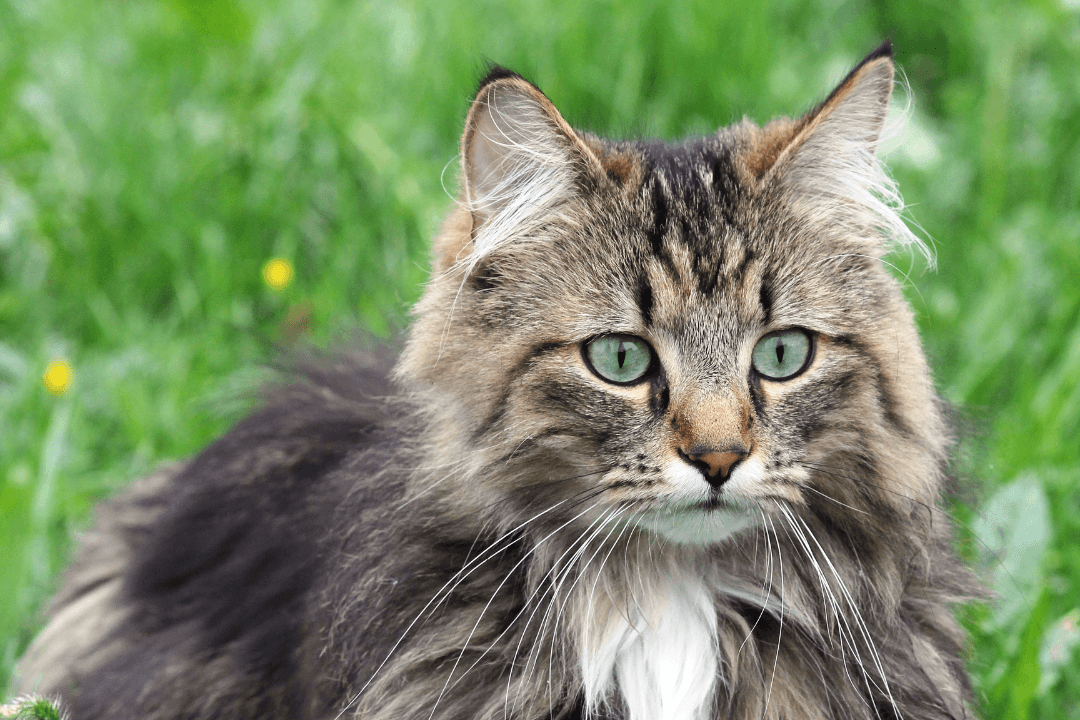
Colours:Solid colours (e.g. white, black, cream, brown) or patterned, often with white.
Health problems:Generally healthy, but can be prone to Hypertrophic Cardiomyopathy (HCM), Glycogen Storage Disease, and hip dysplasia.
Norwegian Forest Cat Personality
A Norwegian Forest Cat is friendly and social. They don't need constant attention but will happily keep you company. They thrive in the company of both adults and children, making them a suitable family pet. They can be a little reserved with strangers, so allow them to take their time getting to know visitors.
Norwegian Forest Cat Appearance and Coat Care
Norwegian Forest Cats often have a long, muscular build. Their coat is long, waterproof, and adapted for cold Nordic forests, requiring significant grooming. To prevent tangles, brush them a few times a week with a metal comb. They shed more heavily in spring and may need more frequent brushing then.
Health Conditions in Norwegian Forest Cats
Norwegian Forest Cats can be affected by hereditary conditions like Hypertrophic Cardiomyopathy (HCM), Glycogen Storage Disease, and hip dysplasia. HCM is a common heart condition. Glycogen Storage Disease is a metabolic disorder that can be fatal within months of birth; genetic testing can identify predispositions. Hip dysplasia, a developmental disorder of the hip joint, increases the risk of osteoarthritis. It's crucial to choose responsible breeders who conduct thorough health screenings.
Dental Health
Did you know your cat's teeth need brushing? Daily brushing is the best way to prevent gum disease (periodontitis). You can learn more in the Lassie app. FORL is a common dental disease in cats, often linked to periodontitis. Brushing can be a challenge, but with patience and treats, your cat can get used to it! Find out how in the app's courses.
Poisoning Risks
Many common items can be poisonous to cats. Houseplants are one example; learn which are toxic and test your knowledge in the app. Other dangers include chocolate and rodent poison. Always store hazardous items where your cat cannot reach them!