The Bengal Cat
About the Bengal cat breed
Weight: Males 4.5 - 7 kg, females 3.5 - 4.5 kg
Wither height: Up to 40 cm
Energy level: Energetic
Lifespan: 9 - 13 years
Social need: Great
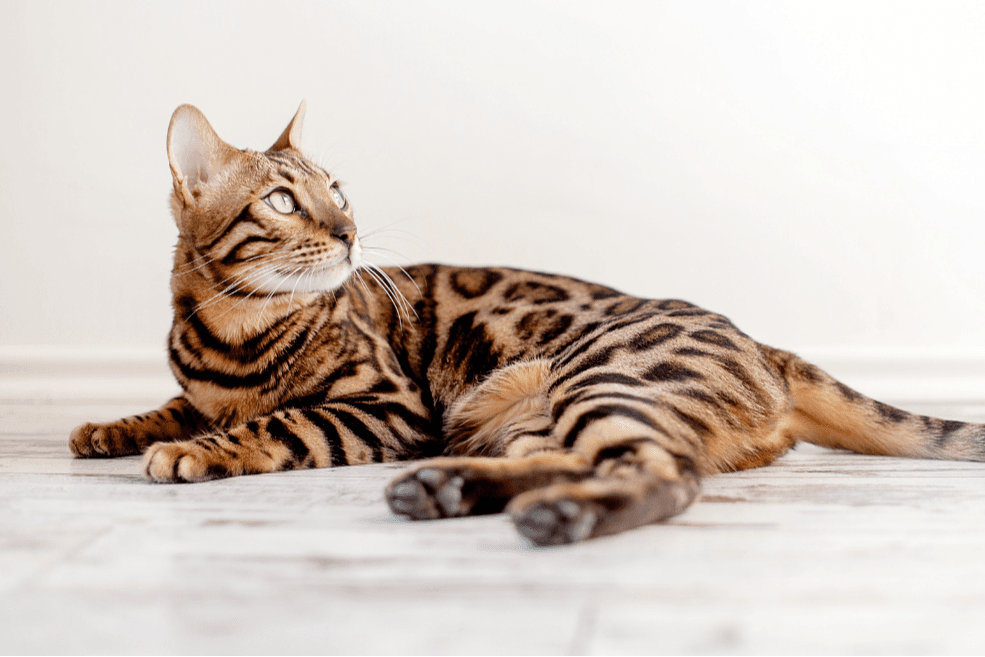
Colours:Spotted or marbled, in shades of black, brown, or orange, with a distinctive spotted or marbled pattern.
Health problems:Generally healthy, but may be prone to Progressive Retinal Atrophy (PRA) and Hypertrophic Cardiomyopathy (HCM).
Personality of a Bengal
Bengals are intelligent, active, and curious. They're usually great fun to live with but require plenty of activation and stimulation. Bengals love to climb and, unlike many other cats, they often enjoy playing in water. They are independent, vocal, and personable, but appreciate attention from their immediate family. Bengals often get along well with other animals, like dogs. You can learn more about how to help your cat and dog become friends in the Lassie app.
Looks and fur care of a Bengal
The Bengal's striking leopard-like coat, muscular build, and size give it a wildcat appearance. Its coat is short, velvety, and easy to care for. Brushing it once a week will keep it looking its best. Bengals often enjoy being brushed and like the attention it brings.
Health problems in a Bengal
The Bengal is generally a healthy cat breed. However, some genetic conditions can occur, such as Progressive Retinal Atrophy (PRA) and Hypertrophic Cardiomyopathy (HCM). PRA is an inherited eye disease that causes gradual vision loss, and HCM is a condition leading to changes in the cat's heart muscle.
Oral health
Did you know your cat needs their teeth brushed? Daily brushing is the best way to prevent your cat from developing gum disease. Learn more in the Lassie app. FORL is a common dental condition in cats, often linked to gum disease. Brushing your cat's teeth can be a challenge, but with treats and patience, they'll eventually get used to it! Find out how to brush your cat's teeth in our app course.
Poisoning
Many common household items can be poisonous to cats, and you might not even realise it. Plants are one example – learn which ones are toxic to your cat and test your knowledge in the app. Other common dangers include chocolate and rodent poison. Always store anything dangerous to cats where they absolutely cannot reach it!