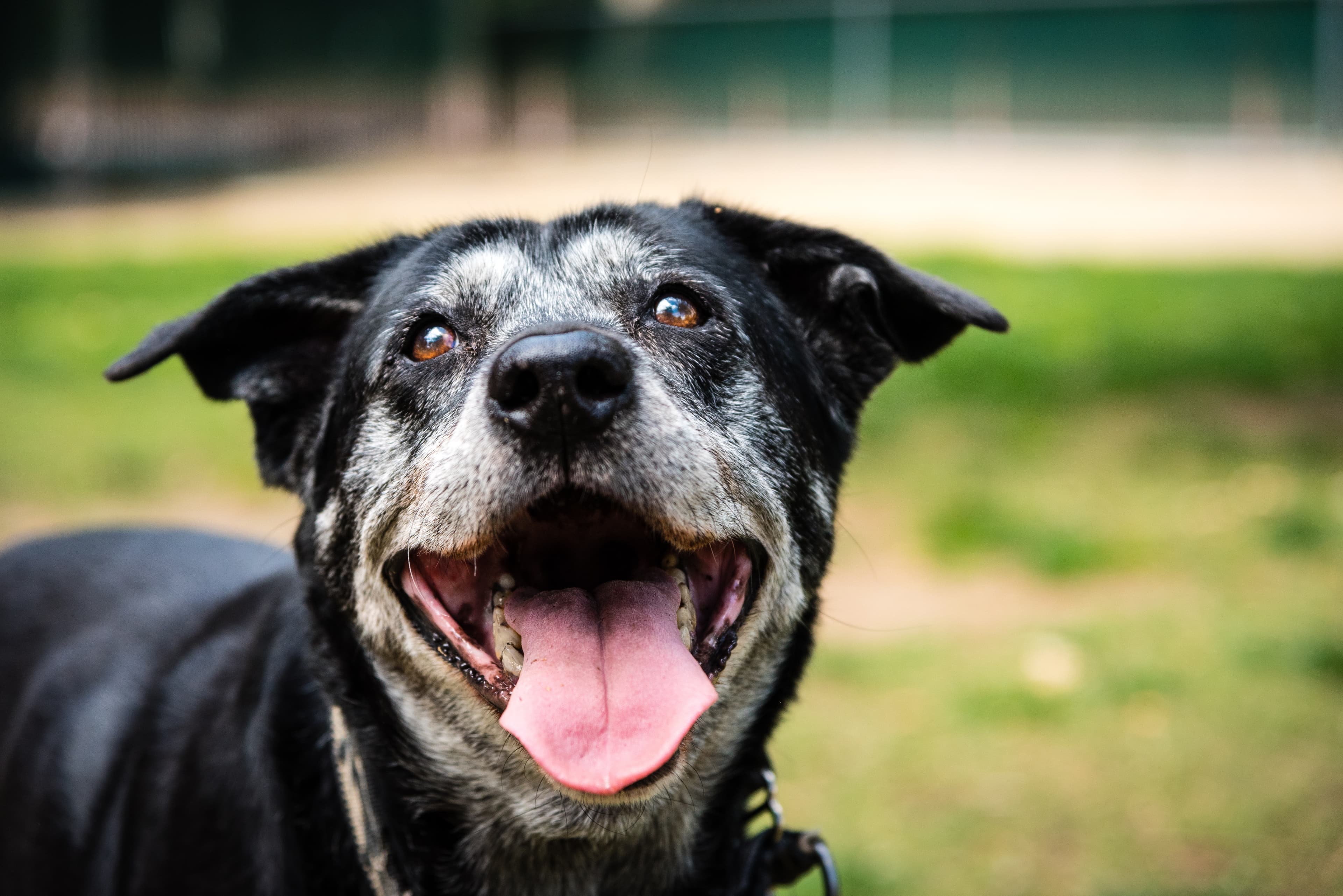
Teaching new tricks to older dogs
You might know the saying: “You can’t teach an old dog new tricks.” This old prejudice stubbornly persists, but the truth is, old dogs can and want to learn! Learning new skills together strengthens their confidence and your bond. It also keeps them mentally and physically fit, contributing to a happy and healthy life. These are great reasons to keep learning and exploring with your senior dog!
Depending on the trick, you can do more than just give your dog a mental workout; you can also strengthen their muscles and body awareness. Tricks that involve small, simple movements or require balance are particularly suitable. As your senior dog masters an exercise, you can gradually increase the difficulty.
Important: Always start at the simplest level to avoid overwhelming your dog. With senior dogs, pay special attention to:
Adjusting the difficulty of exercises to your dog's physical and mental condition
Planning in plenty of breaks
Practising without pressure or expectations – fun should always be the priority!
Choosing appropriate rewards
Keeping training sessions short and simple
Keeping these points in mind will ensure you and your dog have a great time training and learn lots of new tricks.
The balance cushion – a ground target
Exercise aim:Your dog improves and trains their balance by standing with their front paws on a balance cushion. On a signal, they should stand on the cushion independently.
Required materials:
Balance cushion: a simple seat cushion designed for people works well
Treats as a reward
Exercise structure:
Important: The following steps may take more or less time depending on the dog.Always start and end the exercise in a good mood, while your dog is still alert and motivated.
Place the balance cushion on the floor and let your dog explore it independently. You can reward every movement towards or onto the cushion! Give your dog the chance to discover which of their ideas are moving in the right direction. Rewarding your dog's good ideas diligently will further motivate them.
If your dog doesn't step onto the balance cushion on their own after enough repetitions, you can try luring them onto it with a treat. Work without any pressure and give your dog plenty of time to become familiar with the cushion.
Once your dog reliably steps onto the cushion with their front paws, it's time to introduce a verbal or visual cue. For example, you could say 'Balance' or point to the cushion.
When your dog has learned to get on the balance cushion on cue, you can gradually increase the time they stay on it. The goal is for your dog to be able to stand on it calmly.
Increase difficulty:Now you can start increasing the difficulty for your dog to further promote their balance. You can:
Slightly elevate the balance cushion(!)
Place the balance cushion on different surfaces (e.g., grass, sand, etc.)
Lure your dog with treats so they have to shift their weight while standing.
Important: Initially, hold the treat in front of, next to, or above your dog. Hold it just far enough away that your dog has to stretch or turn slightly to reach it. If your dog steps off the cushion, the distance was too great, or they haven't reliably learned the cue yet. Take a step back in your training and practise again.
Treats
With a senior dog, you may need to consider specific factors when choosing treats. For example, age-related dental issues or a slower metabolism might make them prone to weight gain.
Here are some ideas for rewarding your senior dog:
Rice cakes: Rice cakes are easy to chew and low in calories. Made purely from rice, they're also suitable for dogs with allergies. You can break them into small pieces for rewards.
Dry food:If you reward your dog frequently, the extra treats can quickly lead to weight gain. Instead, use your dog’s regular dry food.Important: Ensure you don't exceed their daily recommended food intake. Weigh out your dog's total daily food in the morning and subtract the portion used for treats. The remainder is their food for the day.
Baby food:If your dog has trouble chewing, offer soft, paste-like food from a tube instead of solid treats. Baby food is a healthy and cost-effective alternative to commercial dog treats. Ensure the ingredients are dog-safe and put the purée into a refillable tube. Tip: plain carrot purée is healthy and low in calories – ideal for sensitive dogs!
Carrots: Does your dog love vegetables? Cut raw carrots into small pieces for a low-calorie reward. Important: ensure your dog can chew them well.
Low-fat quark:Whether from a tube or spread on a lick mat, low-fat quark is a wonderful reward for your senior dog! It's high in protein and can benefit their digestion.
As well as the type of food, you can vary how you give the reward. Offer mushy treats from a tube or spread them on a lick mat. Give solid treats by hand, or for extra sniffing fun, wrap them in a towel or scatter them in long grass.
And don't forget:Food isn't always necessary to reward your dog. These can be just as valuable:
Toys
Cuddles
Playing together (with or without toys)
Verbal praise
Your dog's favourite activity (e.g. digging)