Doggy introductions: Making meets positive
Dogs need to meet and play with others to socialise and feel their best. But that doesn't mean they need to play with every dog they meet. Your dog will be happy with a few canine friends (around 2-3) and doesn't need to greet every dog encountered on walks.
Puppies and young dogs
Puppies and young dogs are usually sociable, and it’s great to let them meet calm, well-behaved dogs during this time. As dogs mature, they often settle down and are most comfortable with their close pals. Many dogs aren’t keen on meeting every single dog, and it’s often us humans who push them into these situations. Sometimes, a dog might get frustrated if they were always allowed to greet dogs as a puppy but are suddenly prevented from doing so. This frustration can look like a dislike for other dogs, with tantrums and barking.
Socialisation versus doggy introductions
It’s important to teach your dog the difference between general socialisation and specific doggy introductions. If you're meeting up with doggy pals, let them greet each other freely so they can use their body language and step away if needed. For everyday walks, it's best to simply ignore other dogs. This teaches your dog that these situations are different, and they’ll learn to ignore other dogs on walks while being happy to play with their best friends.
How to manage doggy introductions
You can follow these steps to teach your dog that other dogs aren't the main event on your walks, whether you have a puppy or an older dog.
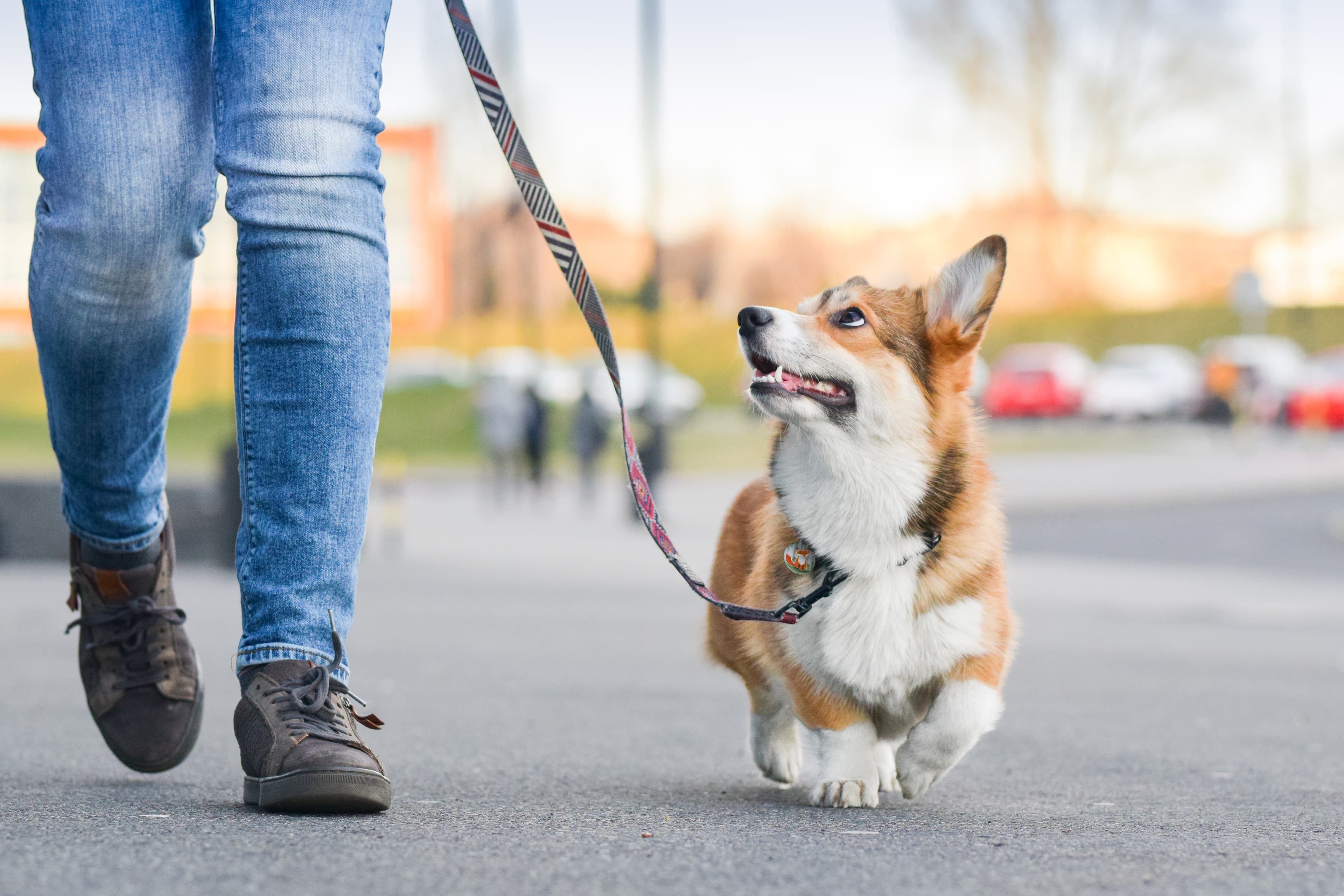
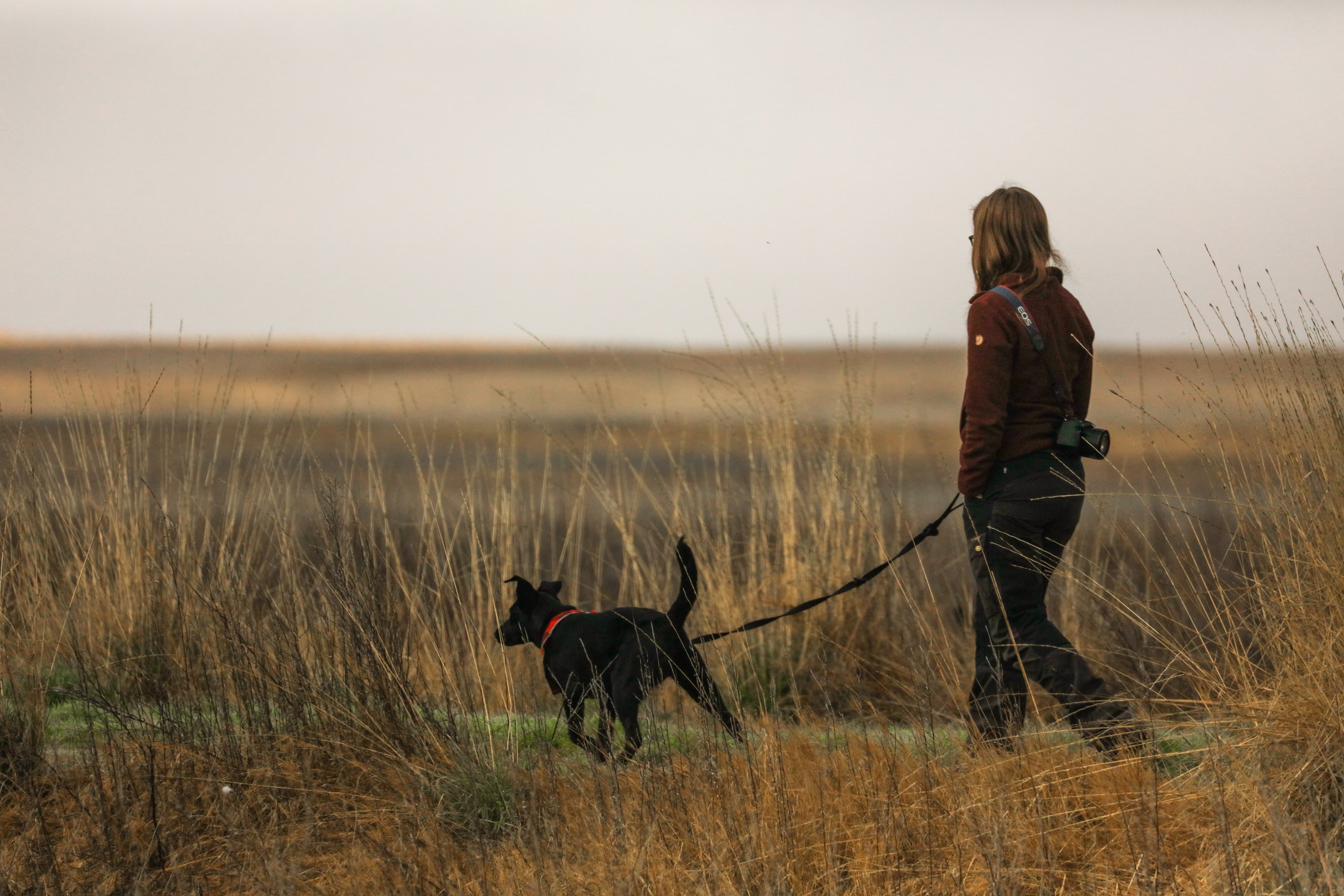
1. Have your dog on the opposite sideWhen you see another dog, move your dog to the opposite side to avoid pulling on the lead and prevent the dogs from reaching each other. You'll also act as a barrier, especially for a more nervous dog, preventing the other dog from advancing and creating a safe space for yours.
2. Keep your distance.It’s vital to maintain a distance your dog is comfortable with. When dogs are on a lead, they can’t decide for themselves how far from another dog they want to be.
3. Walk in an arc. Dogs often greet each other by walking in an arc, which is a great way to manage introductions too. Passing the other dog in an arc sends reassuring signals, as your dog looks away and takes the turn.
4. Stay neutral. Don’t get stressed. Remain neutral and don’t pay too much attention to the dog you’re meeting. This signals to your dog that there’s nothing significant to worry about.
When an introduction goes wrong
If your dog finds the meeting difficult – perhaps barking or showing avoidance – increase the distance and make a note of how much space they needed for the next encounter. The most important thing with doggy introductions is respecting the distance your dog requires. Don't try to tempt them with treats; calmly lead your dog further away from the situation. If you can't increase the distance, it might be best to turn around and walk in a different direction rather than force your dog into a situation they can't handle right now. Some dogs will always need more space than others.