Getting started with running training with your dog
Running is a fantastic activity to share with your dog. It’s great exercise for both of you and wonderful company besides. Movement is essential for all dogs to feel their best, so we’ll guide you on introducing running training safely and effectively.
Introducing running
The key is to always train on your dog’s terms. This isn't the time to set personal bests; focus entirely on your dog’s experience. The approach to introducing running will vary depending on your dog’s current fitness. For an unfit or overweight dog, starting with walks in varied terrain might be more suitable for now. A fit dog might progress faster. Further on, you'll learn the ideal running form and pace for your dog’s body.
Begin your training with short, brisk intervals interspersed with periods of slow jogging and walking. Start with short outings, perhaps just a few miles, and gradually increase the running portions. More details on your dog’s ideal running form can be found below, which will help you determine the right pace.
Can all dogs run?
All healthy dogs can join you for a run, including smaller breeds. Below, you’ll find information on how your dog should run, which is just as important for a small dog as a large one. However, not all dogs will naturally enjoy running. It's therefore best to introduce the activity gradually and always ensure it’s done on your dog’s terms.
Puppies shouldn’t be introduced to formal running training for the first few months. While puppies benefit greatly from exercise, it should be tailored to their developing capabilities and their own pace.
If your dog has a history of muscle, joint, or skeletal issues, it’s wise to consult your vet before starting running training. Regular visits to a canine physiotherapist can also provide valuable advice tailored to your dog’s specific condition. For these dogs, it's vital that training isn't rushed, and you should remain alert for any signs of discomfort. If you notice anything, your dog should rest from training.
How should the dog run?
The pace should never be faster than your dog can comfortably trot. Trotting is a dog’s natural long-distance gait and places the least strain on their body. You can incorporate short bursts of cantering, preferably on soft ground, but this shouldn’t be your standard pace. Simply slow down if your dog starts cantering.
What equipment should I have?
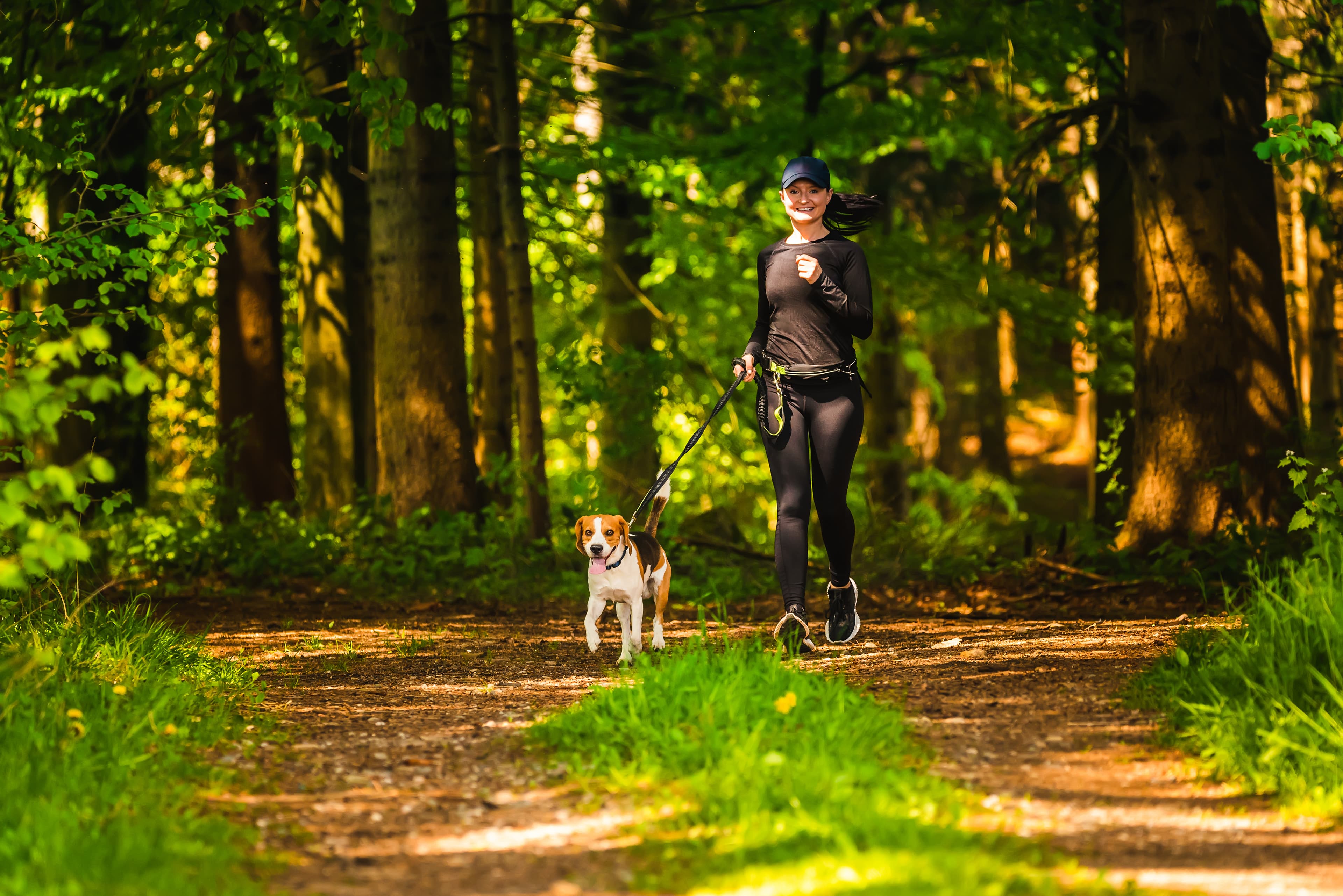
Canicross, or running with your dog attached via a leash, has become a popular sport. In this setup, your dog wears a special pulling harness and is connected to you with an elastic leash attached to a waist belt. Your dog should maintain a slight pull on the harness and run ahead of you. This method is best suited for dogs already in good condition who have been running with you for a while. It’s not recommended for puppies, as they shouldn't be subjected to pulling forces until they are fully grown.
For general running, consider a waist belt and a slightly longer leash and harness for your dog. If you’re not doing Canicross, the harness doesn’t need to be specifically designed for pulling; it's often best for the dog to run alongside or slightly in front of you.
Things to consider on your run
Remember, dogs can't sweat like humans. They regulate their body temperature by panting, which becomes particularly important in warmer weather. Never run with your dog on a hot day, as overheating can be life-threatening. Always be sure to include water breaks on longer runs.
Asphalt can be very hard on a dog’s paw pads, and during hot summer months, it can become extremely hot and cause burns. Choose your running routes carefully to avoid wearing down your dog’s pads. Varied terrain with soft ground is preferable when running with your dog.
Avoid exercising your dog immediately before a run. Always allow a couple of hours between a large meal and a run.