Cat grooming: All you need to know
Cats groom and clean their fur by licking it, which secretes a natural, protective layer of oil. While short-haired cats can usually manage on their own, helping them with grooming still has benefits. If you have a long-haired cat, however, it’s even more important that you assist with their coat care.
Your cat’s coat
Your cat’s breed and genes determine its coat colour and texture. Most cats have a double coat, made up of topcoat (guard hairs) and an undercoat. The topcoat gives the fur its colour and pattern, while the undercoat is the layer of fine, short hairs closest to the skin that provides insulation. Cats generally have a very dense coat and shed a significant amount of fur during the spring and autumn moults.
Why you should help your cat with grooming
Tangles, dirt, and hairballs
Long-haired cats can easily get dirt and tangles in their fur that they can't remove or sort out themselves. Brushing your cat’s coat at least once a week, ideally daily, will help prevent this, which is great for their well-being. If possible, you should also bathe your long-haired cat every couple of months to help keep them clean. Tangles that can't be resolved might need to be shaved or cut off. While some grooming scissors can help with this, sometimes it's best to let a vet remove them.
For both long- and short-haired cats, regular brushing reduces the amount of fur they swallow, which helps prevent hairballs. It's not pleasant for anyone when a cat has to be sick after bringing up a hairball.
Extra benefits
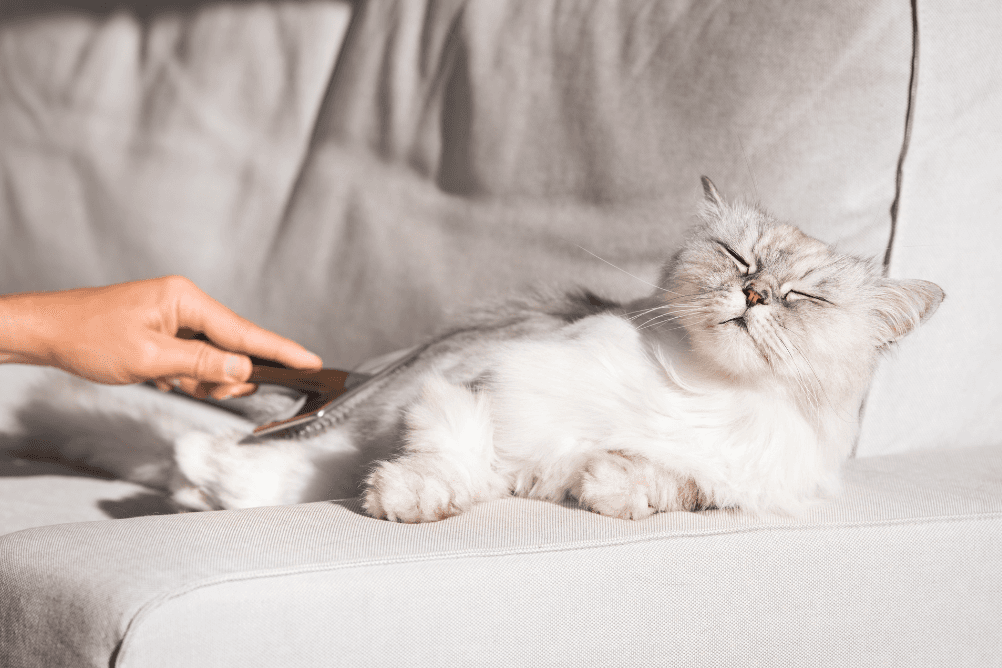
Grooming is also a lovely bonding activity for you and your cat. Plus, regular brushing reduces loose fur around your home, especially during shedding season. It also stimulates blood circulation in your cat’s skin, promotes a healthy, shiny coat, and has a relaxing effect on your cat. If you have cat allergies and an allergy-friendly breed, frequent brushing and bathing can also reduce your exposure to allergens (mainly from loose fur).
Get your cat used to grooming
As not all cats enjoy being brushed, you might need to train them at first. Start by focusing on their favourite spots, like their chin, and gradually move to other areas. Patience and calmness are key, and an occasional treat can help make grooming more enjoyable. Some cats dislike brushes but might be happy with a grooming glove. Remember not to brush against the direction of hair growth – cats really don't like that.
Step-by-step guide to cleaning your cat’s coat
Bathe your cat in warm water – they usually like it, but don't make it too hot. warm water – they usually like it, but don't make it too hot.
Use a good quality shampoo and conditioner specifically formulated for cats.
Don't rub when drying your cat with a towel, as this can easily cause tangles.
After towel-drying, you can gently blow-dry your cat’s coat until it's completely dry, using a hairdryer on an adjustable temperature and speed setting.
Finish by brushing through your cat's fur with a brush or grooming glove.