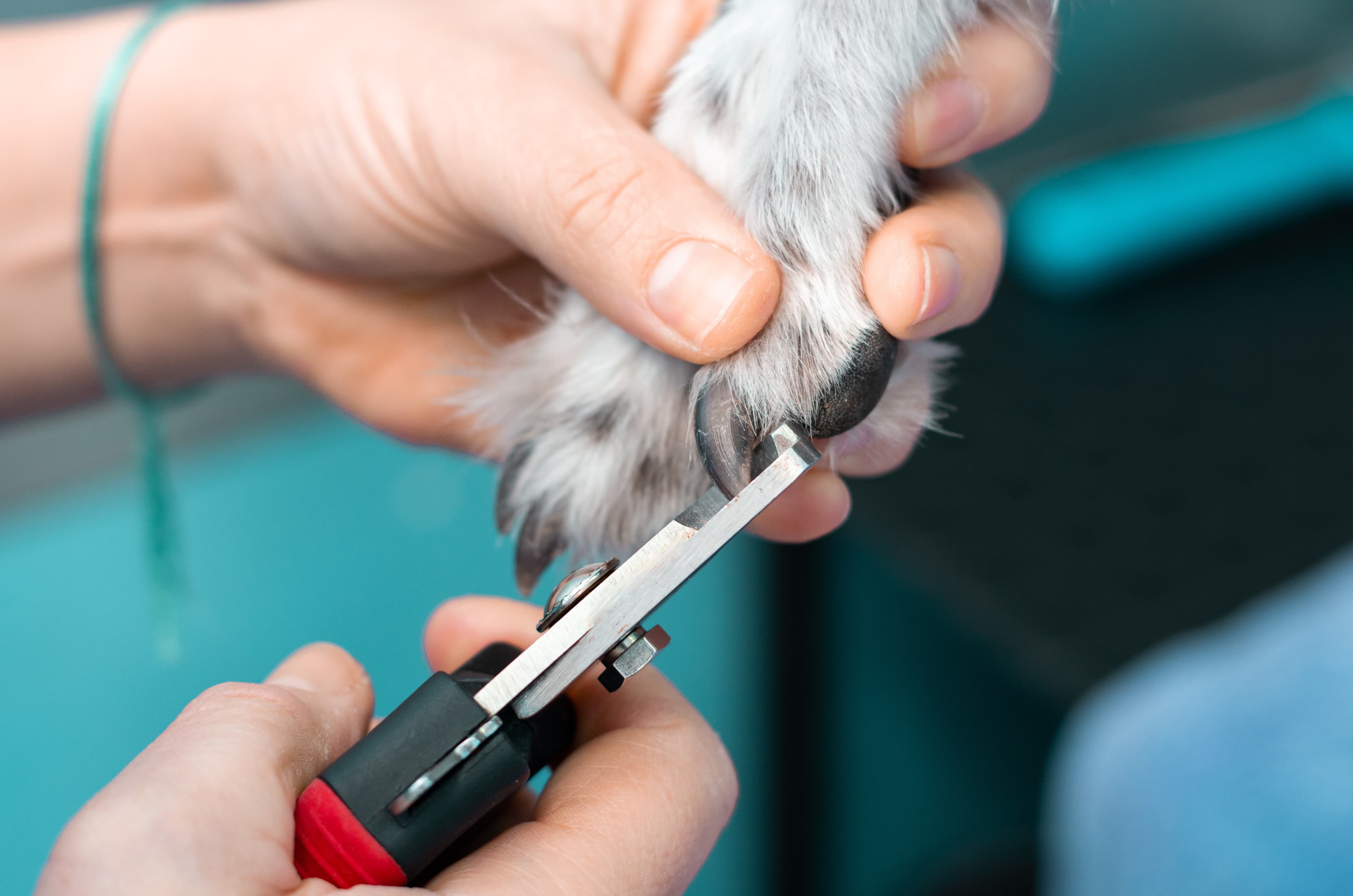
How to clip your dog's claws
As we’ve touched on, clipping your dog's claws isn't always straightforward. The first step to success is getting your dog used to you handling their paws and claws. You can find out more about this here.
This applies whether you have a puppy or a slightly older dog. When clipping your dog's claws, it's important to include the following steps in the process:
Use the right tools
A good pair of claw clippers is the best tool for the job. Make sure they're sharp and the right size for your dog – larger ones for bigger dogs, smaller ones for puppies. Dull clippers will pinch the claw rather than cut it, which hurts!
The right grip, no force needed
This means holding the claw correctly, not wrestling your dog into submission! Grip each individual claw firmly. This helps you clearly see which part is the claw (to be clipped) and which is the quick – the sensitive part you need to avoid cutting.
Angle and length
Figuring out how much to trim can be tricky, as different breeds and individual dogs have different needs. The claws shouldn’t be so long they interfere with walking, but not so short that the dog can’t use them.
The key is not to cut too far into the claw and risk hitting the quick. This is the sensitive inner part of the claw, and cutting it will be painful. If you're unsure, ask someone experienced or your vet for help!
Easy step by step
Take a firm grip on your dog's paw, also holding under the pad of the claw you intend to cut
Cut a thin slice with a cut angle to both sides, a little at a time in each direction.
Stop cutting when you reach the lighter, softer area = the pulp
File off sharp edges and corners
Praise the dog and reward with pats, cuddles and treats!
When things go wrong
It's easy to accidentally cut the quick, causing bleeding, especially when you're still learning the technique. How you react depends on your dog’s response.
If your dog remains calm and doesn't react much, stay calm too. Clean up any blood, continue to pet and praise them for their calmness, and carry on with the clipping to help them get used to it. Let them have a breather before moving on.
Stay calm if your dog is distressed
If your dog becomes very scared, cries out, jumps, or tries to pull away, it’s likely it was quite painful. Don't fuss over them excessively, but don't force them either.
Stop what you’re doing, check the wound, clean any blood, and let your dog relax. Continue with gentle petting and reassurance as you did during the clipping. It’s best to pause the trimming for a while. Be patient and take things slowly and calmly so your dog doesn’t become fearful!