
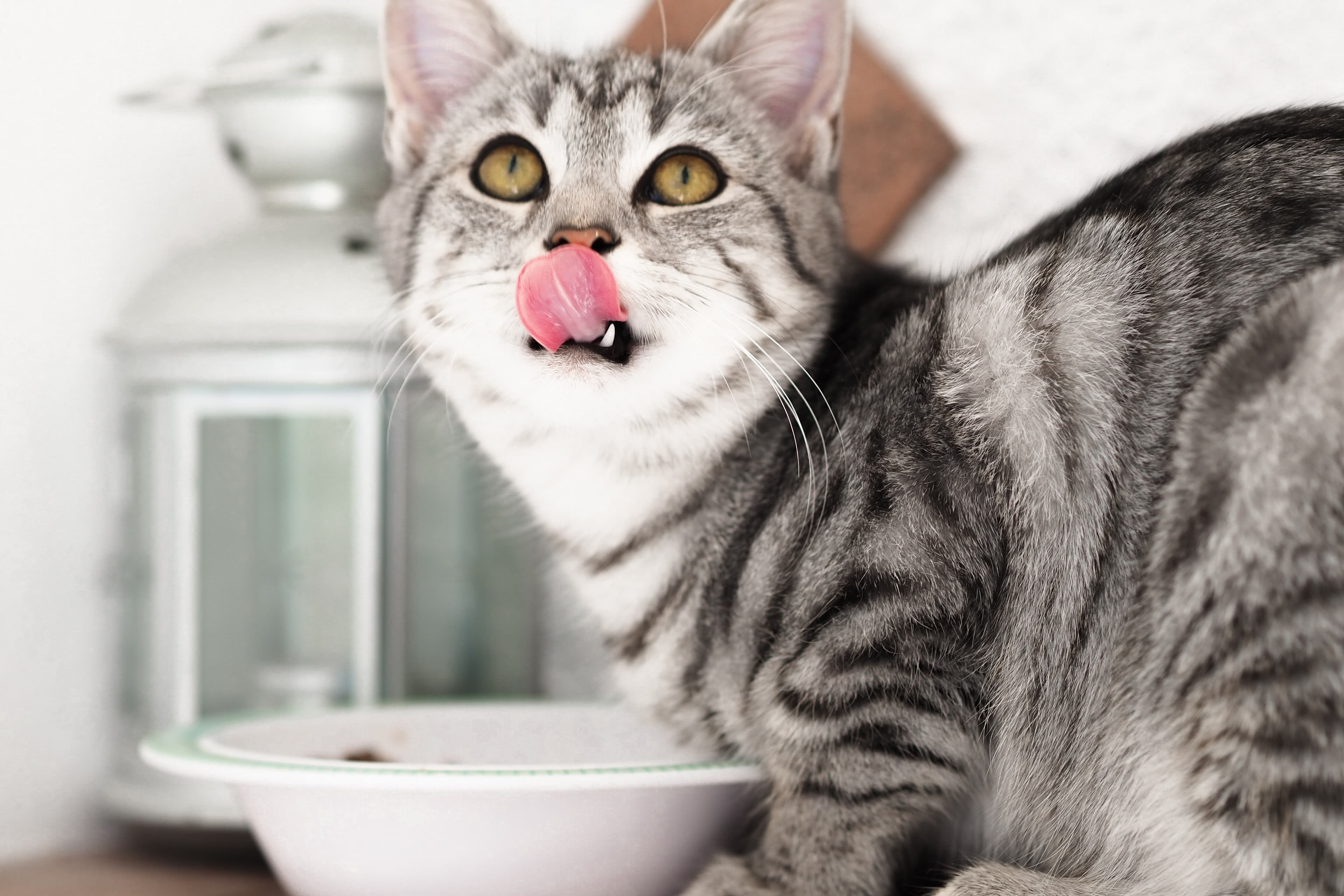
What can cats eat?
Choosing what to feed your cat and what's best for them can be tricky, especially with so many different types of cat food out there. We hope to guide you in deciding what food is right for your cat.
Cats are obligate carnivores, meaning they’re designed to eat a meat-rich, protein-based diet. Their bodies aren't as well-equipped to process large amounts of carbohydrates like dogs, for example. This doesn’t mean they can survive on pure meat alone, as that’s not a balanced diet. A cat that evolved to eat prey like mice or birds consumes almost the entire animal, including the bones. So, feeding your cat only meat isn’t the answer.
A well-balanced diet contains the right mix of protein, fat, vitamins, and minerals your cat needs. There’s wet and dry food, and you might need to experiment to find what works best, or you could combine both. It's always a good idea to speak to your vet for advice on the most appropriate food for your cat’s individual needs and health.
What influences food choices?
Age
Your cat’s age affects their food choice. Feed your kitten food designed for kittens to give them all the nutrition they need. It’s vital for cats to have a good diet, as they use a lot of energy growing, exploring, and playing.
When your cat turns 1, it’s time to switch from kitten food to food designed for adult cats. This change should be gradual, taking about a week. If the switch is too quick, your cat might experience vomiting and/or diarrhoea.
An older cat needs food adapted for senior cats. These foods often contain fewer calories, as older cats tend to be less active than younger ones.
Disease
If your cat has a medical condition, this may also influence your food choice. For example, a cat with kidney failure shouldn’t be fed a high-protein diet. If your cat has a medical condition, we recommend consulting your vet about the best food for them!